Simulation-driven design without the bottlenecks
Parametric geometry, automation, and optimization in one platform.
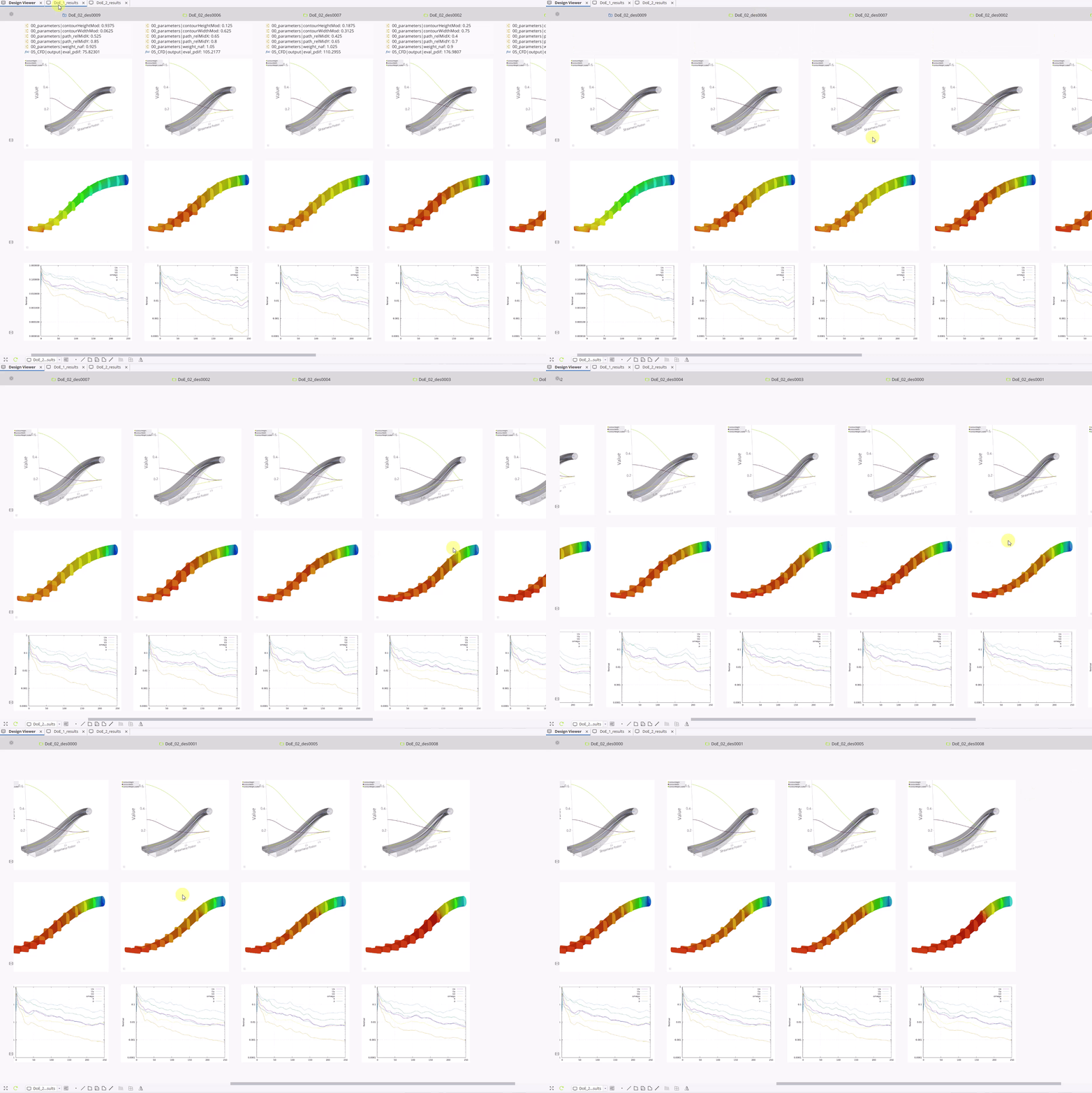
- Reduce design iterations
- Automate simulation workflows
- Explore larger design spaces faster
All core simulation-driven design functionalities in one platform
Flexible parametric geometry modeling
CAESES provides a powerful parametric modeling environment built for simulation-driven design. Based on flexible NURBS geometry, it enables stable, highly adaptable models that support automated design studies, optimization, and data-driven workflows—even for complex freeform shapes.
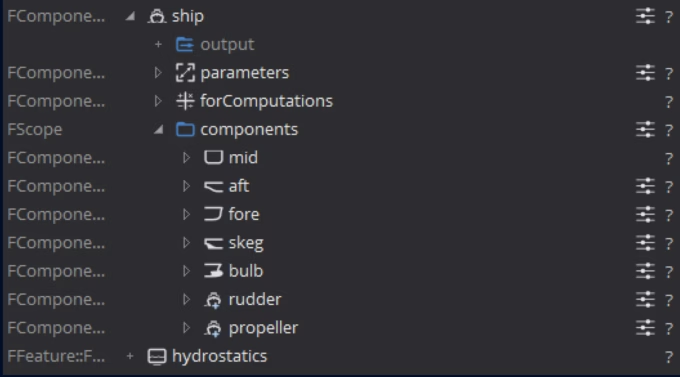
Efficient parameterization
CAESES enables intelligent parameterization of even highly complex, freeform geometries. Instead of relying on large numbers of variables, models are defined using a minimal set of meaningful, descriptive parameters—making them easier to control, understand, and optimize.
Robust geometry variation
Models remain stable and reliable under extensive variation. Geometry regenerates consistently without failures or defects, allowing you to run large-scale design studies and optimization processes with confidence.
Fully customizable modeling
There are no predefined templates or black-box limitations. Every aspect of the model and its parametric logic can be tailored to your specific requirements, giving you full control over how geometry is defined and behaves.
Integrated constraint handling
Geometrical constraints—such as manufacturing or packaging requirements—can be embedded directly into the model. This ensures that all generated design variants remain feasible and reduces the need for manual rework.
Content for "Connect"
Content for "Optimize"
Content for "Insight"
Additional software
highlights
Simulation-ready by design
CAESES® foundation is a powerful and flexible parametric 3D modeler. The main purpose: Robust variable geometry with fewer parameters. CAESES® foundation is a powerful and flexible parametric 3D modeler. The main purpose: Robust variable geometry with fewer parameters.
CAESES® foundation is a powerful and flexible parametric 3D modeler. The main purpose: Robust variable geometry with fewer parameters.
Why CAESES
Stable geometry
Geometry breaks when parameters change, making design variants unreliable and preventing automated studies.
Excessive model complexity
Too many parameters are needed for complex geometries, increasing effort and slowing down exploration.
Automated workflows
Manual geometry cleanup and simulation setup interrupt workflows and block full process automation.
Usable design results
Optimized geometries may violate constraints, requiring rework and reducing trust in the results.
Fast automated iterations
Manual steps and repeated iterations make the design cycle time-consuming and resource-intensive.
Design insights
Key performance drivers remain unclear, making it difficult to explore trade-offs and achieve optimal results.
FAQs
Why would I need an additional CAD system?
The advantages of early-stage Design Space Exploration (DSE) are well recognized within the fast-ship design community. By evaluating design variations in the process, DSE can significantly influence both fundamental design and business decisions, and enhance the effectiveness of later simulations that rely on resource-intensive, higher-order methods.
Why would I need an additional CAD system?
The advantages of early-stage Design Space Exploration (DSE) are well recognized within the fast-ship design community. By evaluating design variations in the process, DSE can significantly influence both fundamental design and business decisions, and enhance the effectiveness of later simulations that rely on resource-intensive, higher-order methods.